
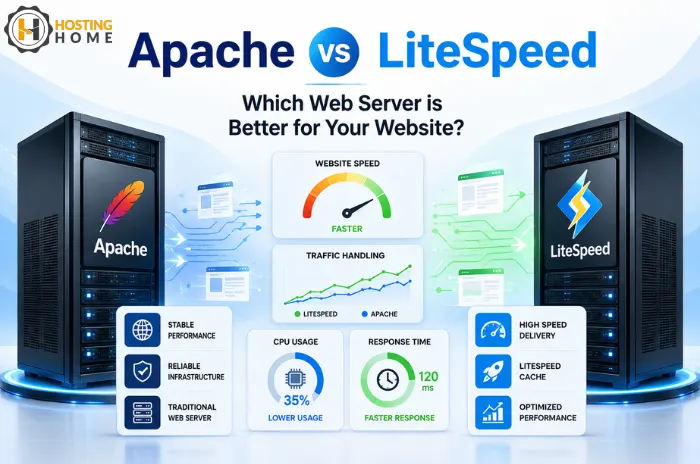
Apache vs LiteSpeed: Which Web Server is better?
When People compare hosting services, they usually look at storage, bandwidth, or pricing. One important factor that often gets ignored is the web server running behind the website.
The web server is responsible for handling visitors requests, loading web pages, serving images, and processing website traffic. Two commonly used web server options in the hosting industry are the Apache web server and the LiteSpeed web server.
Both are popular and widely used, but they work differently. If you’re selecting a hosting provider or are planning to host your own website, understanding these differences can help you make a smart decision.
What Does a Web Server Actually Do?
Whenever someone visits your website, a web server receives the request and sends back the website files to the visitor’s browser.
A Web server handles:
- Website pages
- Images and media files.
- CSS and JavaScript files.
- Security requests
- Traffic management
Whether you are using Linux web hosting or a dedicated server, the web server plays a major role in website performance.
Apache: The Industry Veteran.
For many years, the Apache server has been one of the most widely used web servers.
Many website owners prefer Apache because:
- It is open source
- It has a large community.
- It supports many modules.
- Most developers are familiar with it.
Apache is suitable for business websites, blogs, and web applications. Apache is still widely used by many of the traditional web hosting providers due to its flexibility and compatibility.
You may also have heard about the Apache Tomcat server, which is commonly used for Java-based applications. While Tomcat and Apache serve different purposes, they can work together.
LiteSpeed: Built for performance.
The LiteSpeed server was designed for performance and efficiency.
Its main goal is to handle more visitors while consuming fewer server resources.
Some advantages include:
- Faster page loading
- Better traffic handling
- Lower CPU usage
- Built-in caching features
- Improved performance during traffic spikes
For websites using WordPress, LiteSpeed often provides noticeable speed improvements when combined with LiteSpeed Cache.
This is why many companies providing LiteSpeed server hosting promote it as a performance-focused solution.
Real Example: Traffic Spike Scenario
Now think about an online store running a weekend sale.
The website receives 500 visitors per day, on normal days. During the sale, traffic suddenly increases to 10,000.
On standard Apache setup:
- Server load may increase significantly.
- Response times may become slower.
- Additional optimisation may be required.
On a properly configured LiteSpeed server:
- Requests are handled more efficiently.
- Cached pages reduce server load.
- Website performance may remain stable.
That’s why many businesses with growing traffic choose LiteSpeed-powered hosting.
Comparing Resource Usage
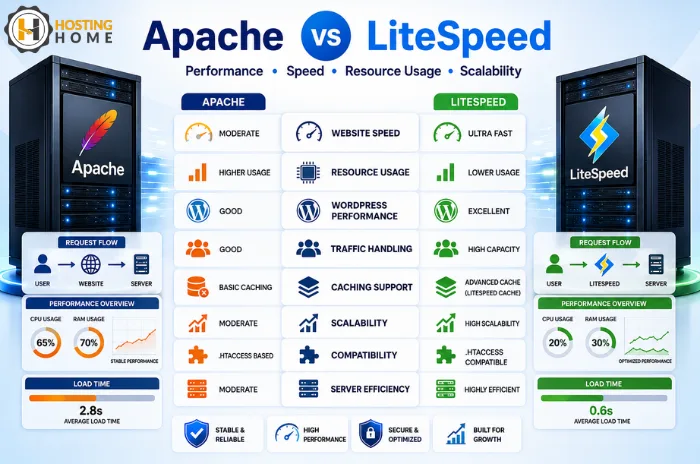
Resource efficiency is one of the major differences in the LiteSpeed web server vs Apache discussion.
Apache works very well but may need more server resources during high traffic periods.
LiteSpeed is often able to:
- Use less RAM
- Handle more simultaneous connections.
- Serve cached pages faster.
For hosting providers that host hundreds of websites, these savings can be significant.
Which Server is Easier to Manage?
Apache has been around longer, so many administrators know how to work it.
However, LiteSpeed is designed to support many Apache configurations, which can make migration easier.
Some web hosts offer the ability to switch from Apache to LiteSpeed, which can be done without major website changes.
For website owners using shared hosting, the difference is usually invisible because the hosting company handles the server maintenance.
Common Mistakes Website Owners Make.
Many people think that website speed depends only on hosting plans.
In reality, there are other factors that can affect performance:
- Large image files
- Too many plugins
- Poor website coding
- Outdated software
- Missing caching configurations
Even the fastest web server cannot fully compensate for a poorly optimized website.
Administrator Tips
If you are managing a website or server, here are some helpful tips for you:
- Enable caching whenever possible.
- Keep applications updated
- Monitor server resource usage.
- Optimize images before uploading.
- Remove unnecessary plugins
Good server software combined with proper website optimization generally delivers the best results.
So, Which One Is Better?
There is no universal winner.
Apache remains a great option for flexibility, compatibility, and long-term reliability.
LiteSpeed often performs better for high traffic website and WordPress projects where speed is a priority.
For many businesses, the decision is based on:
- Traffic volume
- Website type
- Hosting environment
- Performance requirements
The good news is that both servers are capable of running a modern website successfully when configured correctly.
Conclusion:
Choosing between Apache and LiteSpeed is not simply about picking the latest technology. It’s all about choosing the solution that matches your website’s needs.
Apache continues to power millions of websites globally, while LiteSpeed has become popular for delivering faster performance and improved efficiency.
When evaluating web hosting services in India, it is worth checking the web server your provider uses, as it can directly impact speed, scalability, and user experience.
Web Hosting at Hosting Home.
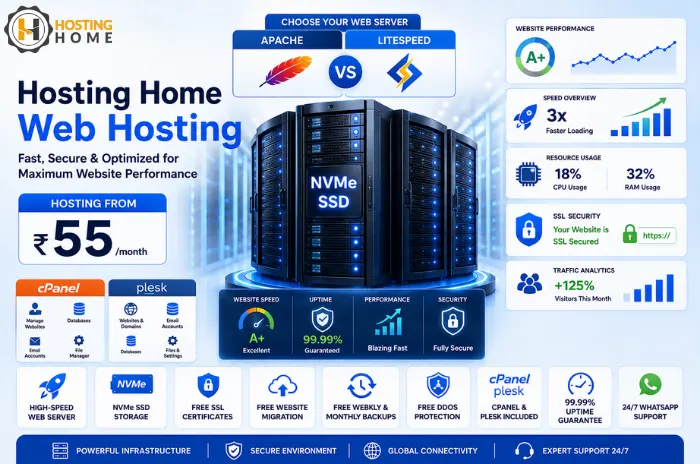
Hosting Home offers reliable and affordable hosting services for businesses, bloggers, developers, and growing websites.
Features include:
- Web hosting starting at just ₹55
- Free SSL certificates
- NVMe SSD-powered servers
- Free website migration
- Free weekly/monthly backups
- Free DDoS protection
- cPanel/Plesk control panels
- Fast server performance
- High Uptime servers
- Quick 24/7 WhatsApp support
Whether you’re launching your first website or managing multiple projects, Hosting Home offers reliable hosting with the speed and support needed for long-term growth.
